

If no one ever saw what you made, would you still create?
We like to think creativity should exist on its own, without needing anyone else. But that’s not always true. I kept coming back to this question: If no one ever saw what you made, would you still create? My answer surprised me by being more honest about why I make things at all.
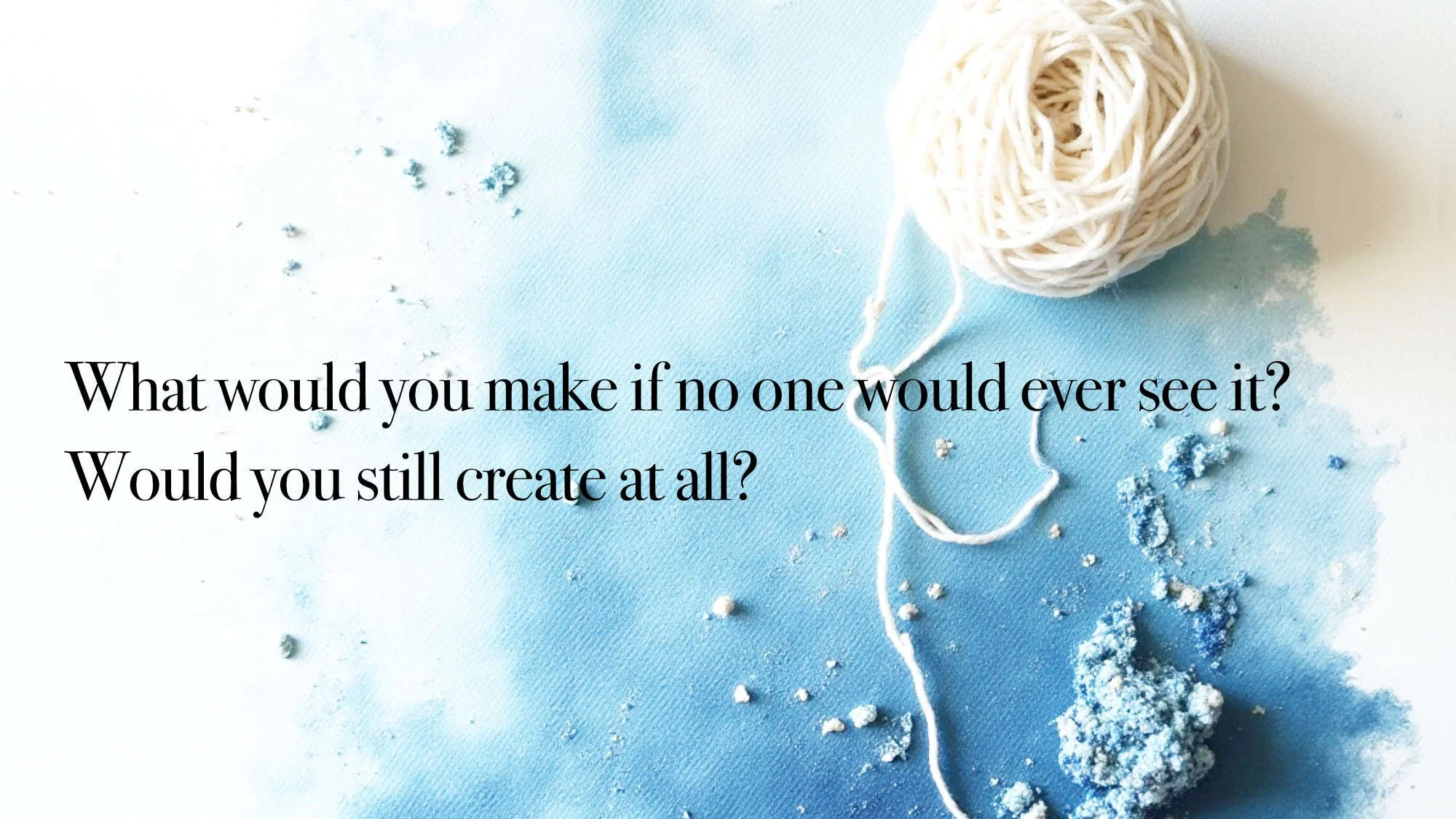
If no one ever saw what you made, would you still create?
Today, my honest answer is I don’t know, or perhaps not the type of things I make now. It doesn’t mean I don’t like what I do. But if no one would ever experience it, I might start searching for something different — a deeper, more personal form of art, made purely for the experience of creating itself, and there is a chance I would create things nobody, but me, would understand, appreciate, or enjoy.
The impulse to create comes from inside of us, of course. It’s not about applause — it’s about connection. Part of it is wanting someone else to experience it. Like cooking — you might enjoy making the meal, but something feels missing if no one ever tastes it.
There’s a real difference between making a doll and hiding her in a box, or placing her somewhere she can be held, seen, and loved. Shared.
That doesn’t make it shallow. It’s human. Art is a conversation. Without someone on the other side, it can feel like speaking into silence. Sharing is part of the process — sometimes the meaning only fully exists once it’s received. Creativity has always lived in community — stories, songs, objects, rituals.
So if making only for yourself feels a bit empty, that’s not a flaw. It just means your creativity is wired for connection. What matters is the difference between needing applause and wanting connection. One drains you. The other feeds you.
There’s also another layer to this. For some artists, the work is already complete in the mind. Once imagined, it feels real.
That can mean: Making becomes optional. The satisfaction comes from the idea, not the object. Creating physically is more about sharing than necessity.
Some people carry entire galleries in their head, and that’s enough. Others feel a quiet tension until the work exists in the world. Neither is better. It just comes down to this: do you feel more alive when you imagine — or when you manifest?
Now, let’s ask this question a little differently.
If no one ever saw what you made — what would you create, or would you create at all?
So the question shifts a little:
“Would you still create?”
This is a yes-or-no question. It assumes your way of creating stays the same — it just asks if you’d continue at all.
“What would you create, or would you create at all?”
This opens things up. It questions not just if, but how. It allows for change — maybe you’d create differently, less, more privately, or stay in ideas instead of finishing.
The first tests whether creation continues. The second explores how creation might transform.
Maybe you’d make smaller things. Quieter things. Maybe you’d stay in the idea stage longer — building whole worlds in your head and leaving them there. Maybe the act of making would feel less urgent.
Maybe you wouldn’t stop creating entirely. But you might stop finishing. Or stop bringing things into the world.
It might be worth sitting with this question — especially if it makes you a little uncomfortable, or even scared to answer honestly. It scared me at first, but once I moved through it, something opened; I felt free.
Keep exploring! 🖤
©Maiiou. Maja Piskorska. All rights reserved.
“I’d rather risk an ugly surprise than rely on things I know I can do.”
